Industrial doors are essential for the smooth operation of warehouses, factories, logistics centres, retail units, and commercial buildings across the UK. They provide security, control access, improve energy efficiency, and support daily business operations. However, because they are large, heavy, and often automated, they can also present significant risks if they are not properly installed, maintained, and operated.
Understanding industrial door safety is not just about protecting your employees—it's also about complying with UK legislation, reducing liability, preventing costly downtime, and extending the lifespan of your equipment.
In this guide, we'll explain the most important safety standards, the responsibilities of business owners, and the steps every organisation should take to ensure industrial doors remain safe and compliant.
Why Industrial Door Safety Matters
Industrial doors operate many times each day and are subjected to constant wear and tear. Faulty components, damaged safety devices, or poor maintenance can quickly create hazards for employees, contractors, customers, and visitors.
Prioritising industrial door safety helps businesses:
- Protect employees from accidents
- Reduce operational downtime
- Minimise expensive repairs
- Maintain regulatory compliance
- Extend equipment lifespan
- Improve overall workplace efficiency
A proactive approach to safety protects both people and business operations.
UK Regulations That Apply to Industrial Doors
Several pieces of UK legislation govern the safe use and maintenance of industrial doors.
Business owners should be familiar with:
The Health and Safety at Work Act 1974
This legislation places a duty on employers to ensure, as far as reasonably practicable, the health and safety of employees and anyone affected by their business activities.
Industrial doors must therefore be maintained in a safe operating condition.
Provision and Use of Work Equipment Regulations (PUWER)
PUWER requires all work equipment, including powered industrial doors, to be:
- Suitable for use
- Properly maintained
- Regularly inspected
- Safe to operate
Businesses that fail to comply could face enforcement action or increased liability following an accident.
Workplace (Health, Safety and Welfare) Regulations
These regulations require workplaces to be maintained in a safe condition, including entrance and exit systems such as industrial doors.
The Importance of Regular Inspections
Routine inspections are one of the most effective ways to improve industrial door safety .
Over time, components naturally wear due to:
- Frequent opening and closing
- Vehicle impacts
- Weather exposure
- Mechanical fatigue
- General ageing
Professional inspections identify developing problems before they become serious safety hazards.
A preventative maintenance programme also reduces unexpected breakdowns and costly emergency repairs.
Essential Safety Features Every Industrial Door Should Have
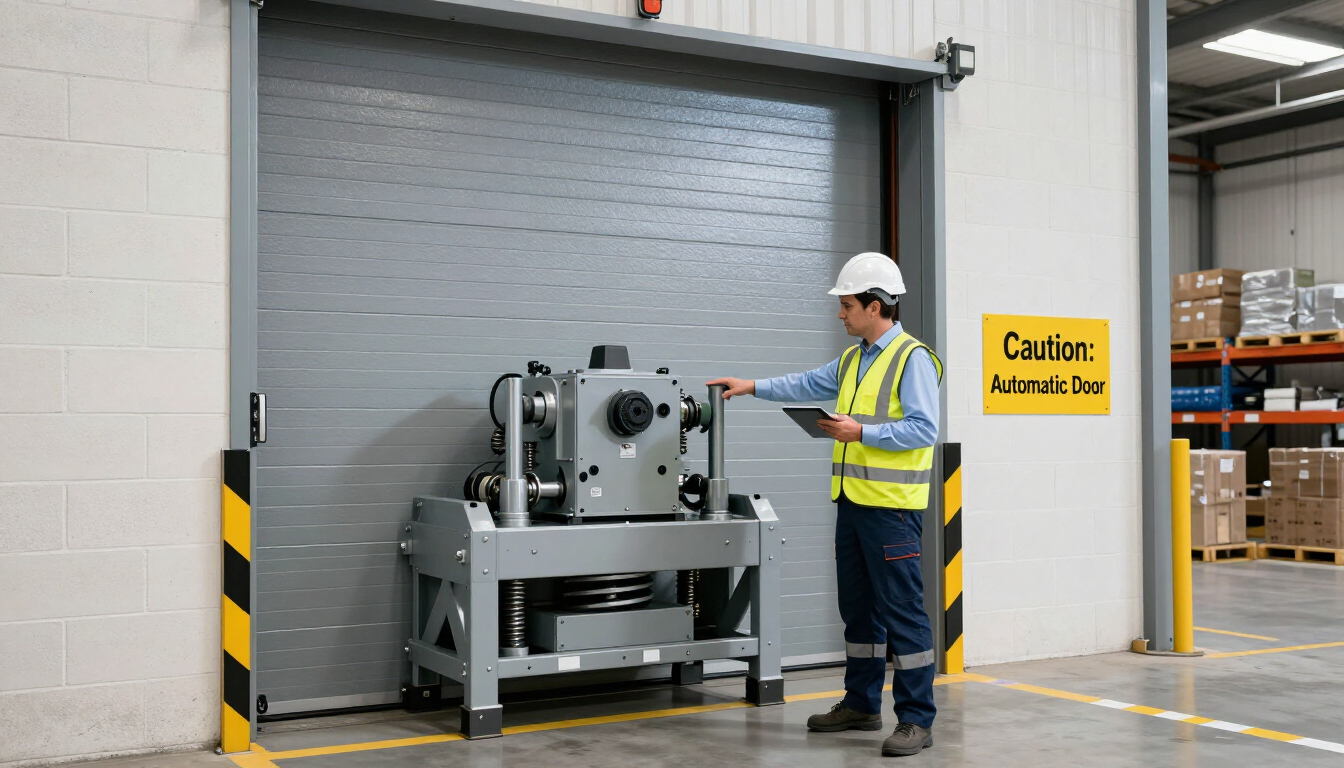
Modern industrial doors are fitted with multiple safety systems designed to protect people and equipment.
Common safety features include:
Safety Photocells
These sensors detect people, vehicles, or objects within the door opening.
If an obstruction is detected, the door automatically stops or reverses.
Safety Edges
Pressure-sensitive safety edges immediately stop door movement if contact occurs.
These devices help prevent trapping injuries.
Emergency Stop Controls
Emergency stop buttons allow operators to halt door movement instantly if a dangerous situation develops.
These controls should always remain clearly visible and easily accessible.
Manual Override Systems
In the event of power failure, manual override mechanisms allow doors to be opened safely without relying on electrical systems.
Warning Signs That Your Industrial Door May Be Unsafe
Even well-maintained doors can develop faults over time.
Businesses should never ignore warning signs such as:
- Slow operation
- Jerky movement
- Grinding or unusual noises
- Damaged tracks
- Loose hinges
- Broken springs
- Frayed lifting cables
- Faulty sensors
- Door failing to fully close
- Difficulty locking
Any of these symptoms should be investigated by a qualified engineer as soon as possible.
Employee Training Plays an Important Role
Even the safest industrial door can become dangerous if employees use it incorrectly.
Staff should understand:
- Safe operating procedures
- Emergency stop locations
- Reporting maintenance issues
- Safe vehicle approach speeds
- Restricted access areas
- Manual operation during emergencies
Simple training significantly reduces the likelihood of accidents.
Why Preventative Maintenance Improves Safety
Waiting until a door breaks down often creates unnecessary risk.
Scheduled servicing helps engineers:
- Inspect mechanical components
- Lubricate moving parts
- Test safety devices
- Check electrical systems
- Adjust door alignment
- Replace worn components
- Verify compliance with manufacturer recommendations
Preventative maintenance keeps equipment operating safely while reducing unexpected failures.
Choosing a Qualified Industrial Door Specialist
Not all contractors provide the same level of expertise.
When selecting an installation or maintenance provider, look for:
- Experienced engineers
- Comprehensive servicing programmes
- Emergency repair support
- Knowledge of current UK regulations
- Manufacturer-approved replacement parts
- Detailed inspection reports
Working with experienced specialists helps ensure your doors remain compliant throughout their lifespan.
Common Industrial Door Safety Mistakes
Businesses sometimes unknowingly increase risk by overlooking basic maintenance.
Common mistakes include:
- Delaying repairs
- Ignoring unusual noises
- Blocking safety sensors
- Skipping routine servicing
- Attempting DIY repairs
- Failing to train employees
- Using damaged doors
Small issues can quickly develop into serious safety hazards if left unresolved.
Benefits of Maintaining Safe Industrial Doors
Investing in industrial door safety provides long-term advantages that extend far beyond mere regulatory compliance. By prioritizing safety features like photocells, pressure-sensitive edges, and emergency stop controls, businesses create a robust infrastructure that protects both human and physical assets.
Businesses that maintain high safety standards often experience:
- Fewer workplace accidents: Properly functioning safety systems prevent trapping injuries and collisions.
- Lower maintenance costs: Identifying small mechanical issues early through preventative maintenance prevents expensive emergency repairs.
- Improved productivity and reduced downtime: Reliable doors ensure smooth traffic flow, which is critical for high-traffic facilities like logistics centres.
- Longer equipment lifespan: Routine lubrication and alignment checks reduce wear and tear on components like springs and cables.
- Greater employee confidence: A safe working environment improves staff morale and overall workplace efficiency.
- Better insurance risk management: Demonstrating a proactive approach to safety can help reduce liability and insurance risks.
Safe equipment contributes to a safer, more efficient working environment, ensuring that entrance and exit systems support rather than hinder daily operations.
Conclusion
Maintaining high standards of industrial door safety is essential for protecting employees, ensuring legal compliance, and keeping your business operating efficiently. Regular inspections, preventative maintenance, properly functioning safety systems, and employee training all play an important role in reducing risk and preventing costly breakdowns.
If your business needs expert advice, professional inspections, or ongoing industrial door maintenance, Tri Door is here to help.
Our experienced engineers provide installation, servicing, repairs, and preventative maintenance across the UK, helping businesses keep their industrial doors safe, compliant, and operating at peak performance. Contact us today to arrange a site survey or discuss a maintenance plan tailored to your facility.